Nations League
🇩🇪 Germany – Netherlands 🇳🇱: historic rivals battle in Berlin for a place in the Nations League quarter‑finals
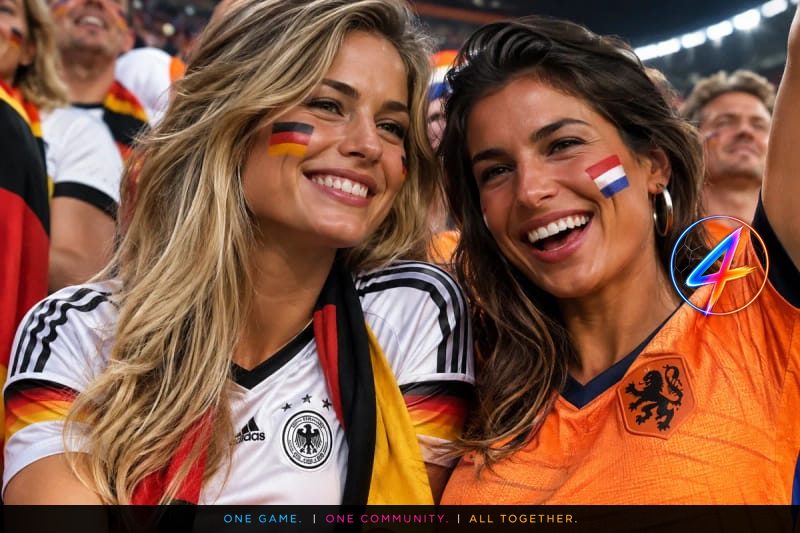
Germany host the Netherlands on Monday evening at Berlin's Olympiastadion for the final group match of the UEFA Nations League. With two spots still up for grabs in the quarter‑finals and three contenders in Group A2, a lot is at stake. Both sides also come in confident after their previous games: Germany beat Serbia 3‑1, while the Netherlands thrashed Greece 7‑0.
When Germany and the Netherlands meet, it is rarely just another friendly. Both nations share a rich football history, with World titles, European championships and head‑to‑head clashes playing a major role.
The Monday night meeting marks the 50th official international between the two national sides. In addition to its historic weight, the game carries clear sporting stakes: the allocation of the Nations League quarter‑final spots.
The Netherlands start as group leaders with eleven points. Germany and Greece sit on eight each, and Serbia are still on zero. The starting positions therefore differ markedly, but the final table is still undecided.
Netherlands defends its top spot after an impressive win
The Dutch side, led by head coach Xavi Hernández, has been remarkably consistent in this Nations League campaign. Orange remained unbeaten in the first five group games, recording three wins and two draws. The most recent match, on Friday 13 November, produced a striking result. At the Johan Cruijff Arena the Netherlands routed Greece 7‑0, leading 5‑0 at the break. The win cemented the Netherlands' top spot and took a crucial step toward the quarter‑finals. The seven goals underline the Dutch side's attacking firepower, boasting players with international experience at several European top clubs. In Berlin a draw is sufficient to lock in the group win. Even if they lose, the Netherlands can still advance, depending on the Greece‑Serbia result.
Germany recovers after a shaky group stage
For Germany the group phase was less convincing. The side of head coach Jürgen Klopp opened the campaign on 24 September with a draw against the Netherlands in Amsterdam. Then Germany fell 0‑1 at home to Greece, before a win over Serbia and a goalless draw in Greece. On Friday 13 November Germany secured an important away win in Belgrade. It was 1‑3 against Serbia. Florian Wirtz and Brajan Gruda were among the German scorers. The victory lifted Germany to eight points and kept their quarter‑final qualification hopes alive. The German side plays for its home crowd and needs a win to maximise direct qualification chances. A draw could also suffice, but only if Greece loses its final group game against Serbia. Thus Germany and the Netherlands face each other in a game where each side requires a different result to lock in their sporting goals.
Netherlands * Guarantees the group win with a win or draw. * Also advances with a loss if Greece fails to win.
Germany * Becomes group winner by beating the Netherlands and Greece not winning. * Can qualify with a draw if Greece loses. * With a win, its final standing still hinges on Greece's result.
Greece * Can still qualify, depending on its own result against Serbia and the Berlin match.
The Germany‑Netherlands and Greece‑Serbia fixtures kick off simultaneously at 20:45.
Fiftieth meeting between two historic football nations
The Germany‑Netherlands clash is one of the most renowned rivalries in European internationals. Before Monday's game the two nations had met 49 times. Germany won eighteen, the Netherlands twelve and nineteen ended in draws. The shared history includes several games that have secured a permanent place in international football lore.
World Cup 1974: West Germany wins the world title On 7 July 1974 West Germany faced the Netherlands in the World Cup final in Munich. The Netherlands, led by Johan Cruyff as the chief proponent of total football, went ahead early via a penalty from Johan Neeskens. West Germany overturned the deficit with goals from Paul Breitner and Gerd Müller. The 2‑1 victory gave West Germany its second world title.
Mulder warns, Brajan Gruda is the most dangerous German for Netherlands
Euro 1988: Netherlands takes revenge Fourteen years later the two met again at a major finals tournament. In the Euro 1988 semi‑final the Netherlands defeated West Germany 2‑1. Ronald Koeman and Marco van Basten scored for Orange. The Dutch reached the final and a few days later, after beating the Soviet Union, secured their first European crown.
World Cup 1990: Germany wins in Milan At the 1990 World Cup the two met again. In the round of 16 West Germany won 2‑1. Jürgen Klinsmann and Andreas Brehme scored for the Germans. Ronald Koeman scored the Dutch goal. West Germany eventually lifted the World Cup.
Even in recent years the head‑to‑head fixtures have often produced thrilling matches. In the Nations League of September 2024 the Netherlands‑Germany game finished 2‑2. A month later Germany won the home fixture 1‑0. The latest encounter, on 24 September 2026 in Amsterdam, finished 1‑1. Felix Nmecha gave Germany the lead, before Cody Gakpo levelled in the dying minutes.
Personnel situation: both head coaches must make choices
In both sides injuries and player availability affect preparation.
Germany without Musiala and Gnabry Germany have to cope without Jamal Musiala and Serge Gnabry. Both are sidelined with muscle issues. Head coach Jürgen Klopp still has several attacking options. Florian Wirtz is a key creative player in the German set‑up, while Kai Havertz can operate in several attacking roles. Brajan Gruda has also stood out with his role in the victory over Serbia. At the Sunday 15 November press conference Klopp stressed that his players want to extend the positive momentum from Belgrade. The coach cited the quality of recent training and the motivation to reach the quarter‑finals.
Netherlands without Van Dijk The Netherlands also have to miss several key players. Captain Virgil van Dijk and striker Brian Brobbey withdrew earlier for the international window due to physical issues. Additionally, Frenkie de Jong picked up a back injury in the Greece game and returned to Barcelona for treatment. This means head coach Xavi Hernández must contemplate tweaks to his defensive shape and midfield arrangement. With players like Micky van de Ven, Jan Paul van Hecke, Jurriën Timber, Teun Koopmeiners and Tijjani Reijnders the Netherlands have several options to compensate for the absences.
Players to watch
🇩🇪 Germany Florian Wirtz The German attacking midfielder is among the technically skilled players in the national team. His movement between the lines, passing and knack for creating attacks make him a key link in the German build‑up. He also scored in the win over Serbia.
Kai Havertz Havertz’s versatility allows him to be used in several attacking roles. He can function as a centre‑forward, but also operate from a deeper position behind the striker. In the German press conference he said he mainly plays as a number nine, focusing on creating and exploiting chances.
Joshua Kimmich Kimmich brings experience, positional insight and technical qualities. His ability to distribute the ball and control the tempo can be important against the Dutch midfield.
Xavi calls the Netherlands' defeat a shock for the Nations League
🇳🇱 Netherlands Cody Gakpo Gakpo is one of the main attacking players in the Dutch squad. He combines speed with goal‑orientation and can cut inside from the flank. In the previous encounter with Germany he scored the equaliser.
Tijjani Reijnders Reijnders fulfills an important role in the Dutch midfield. His stamina, passing and ability to move from midfield into attacking positions provide various options in possession.
Denzel Dumfries Dumfries is an attack‑oriented full‑back. His runs along the right side and presence in the penalty area are a recognizable part of his game.
Micky van de Ven The defender has speed and physical qualities. Because of Van Dijk’s absence his role in the Dutch defence is extra relevant.
Tactical focus points
The match pits two national sides that boast technically strong midfielders, attacking wing players and defenders with international experience. For Germany the interplay between midfield and attacking players is a key focus. The presence of Wirtz and Havertz offers various possibilities to build attacks. The Netherlands, on the other hand, have players who can launch attacks from several positions. The midfield battles can therefore play a major role. Also the space behind the defensive lines is a relevant tactical point. Both national sides have attackers who can develop speed and defenders who can be put under pressure. The precise tactical execution will depend on the final line‑ups and the choices of both head coaches.
The Olympiastadion as setting
The match is played in Berlin's Olympiastadion. The stadium was built for the 1936 Olympic Games and is one of Germany's most famous football venues. It hosted the 2006 World Cup final between Italy and France. The Euro 2024 final also took place there. For Germany this match against the Netherlands is the last home international of the 2026 calendar year. The kickoff is scheduled for 20:45.
A decisive evening without a clear favourite
Germany and the Netherlands start the final group match with different starting positions. The Netherlands have the most points, remain unbeaten in this Nations League campaign and come off a big win over Greece. Germany play for their home crowd and booked a crucial win over Serbia in their previous match. Historically both countries have often kept each other in balance. The most recent head‑to‑head also ended level. The Berlin match gives both sides the chance to qualify for the next round, while the Greece result can also affect the final group ranking. Which team ultimately makes the best use of its starting position will have to be seen on the field on Monday evening.
One certainty is clear: the fiftieth meeting between Germany and the Netherlands will have an important place in the fight for the UEFA Nations League quarter‑finals.